Fools aka Pratts

Why do we put up with fools?

Well the first step is to define a fool. Yes we have all met them, worked with them and sometimes we have all been one. If you know you have acted like a fool that’s a start but a lot of people really don’t know when they are being a complete 22 carat unmitigated pratt.

So consider the workplace pratt. The most well known to all of us is Ricky Gervais as David Brent, the bumbling, self deluded manager in the UK tv show “The Office”. Who has never compared their boss to Ricky’s tv character, but the really serious issue is when you have this sort of Pratt who reports to you Well the first step is to define a fool. Yes we have all met them, worked with them and sometimes we have all been one. If you know you have acted like a fool that’s a start but a lot of people really don’t know when they are being a complete 22 carat unmitigated pratt.

So consider the workplace pratt. The most well known to all of us is Ricky Gervais as David Brent, the bumbling, self deluded manager in the UK tv show “The Office”. Who has never compared their boss to Ricky’s tv character, but the really serious issue is when you have this sort of Pratt who reports to you.

Well the first step is to define a fool. Yes we have all met them, worked with them and sometimes we have all been one. If you know you have acted like a fool that’s a start but a lot of people really don’t know when they are being a complete 22 carat unmitigated pratt.

So consider the workplace pratt. The most well known to all of us is Ricky Gervais as David Brent, the bumbling, self deluded manager in the UK tv show “The Office”. Who has never compared their boss to Ricky’s tv character, but the really serious issue is when you have this sort of Pratt who reports to you. Often they believe they are doing a great job, work under the misapprehension that their staff see them as born leaders and their boss thinks they are indispensable.

Bearing this in mind my thoughts went to an incident a few years back when I was Project Manager building a new municipal sewage treatment plant in Mumbai, India. We were working for a large civils company and the client was the equivalent of the local city council. I shall leave the whole Mumbai experience to a separate blog. The team consisted of me, two superintendents, six (yes six) QA inspectors, a project controller, numerous administrators and a dozen drivers, plus various assorted foremen. Everyone accept for me and one of the superintendents were local Indians. The superintendent in question was British and still though of India as the last refuge of the British Empire. I used to get the constant carping of “they do to do it like this in the UK” or “since we gave
them independence the place has gone to the dogs” Curious racist and xenophobic comments considering the basket case that the UK had become. But I digress.

This superintendent was technically very good, a hard worker, honest and loyal. But he was hopeless at managing people and even worse at managing upwards ie to me. In his eyes he was never wrong. The spec was wrong, the drawings were wrong, the consultants were d###heads and the client was off his trolley. All incorrect but not in his mind. This caused unbelievable tension and anyone who has worked in places like India know this attitude leads not to confrontation but to confusion and communication breakdown. I tried everything, the arm around the shoulder, the quiet word, even the threat of a one way ticket.

In the end he had to be convinced that he had to go. But the twist is, and the managing of the situation was, for him to convince himself he had to.

Well he’d did and went!

The Dog and the Tail

There is an old expression: something about the tail wagging the dog, the gist being the person who should be in control is in fact controlled by those he should be controlling. Apologies for the tautology but you get my drift.

The traditional project had a PM at the top of the pyramid and the next level would be site manager, project planner and contract administrator. the next level foremen, supervisers etc. Everyone new their role. The PM reported to the Building/ Construction/ Operations manager and they in turn reported to the Rgional/General Manager. Life was simple, comunication flowed up and down the organisation and everyone new their career path, what they were responsible for, and who they were responsible to.

Times have changed. In a world where the most junior cadet can email the client’s managing director and the first thing the PM knows about it is when the sh*t hits the fan, control of communication has become like knitting fog. OK we have Acconex (but don’t get me started) and other project controls, now that term did not exist a few years ago in Australia. Have you ever heard such American nonesonse “Project Controls Manager”. There is only one person in control – the PM, not some glorified QS.

Anyway I digress.

Back to the tail and the dog. Because the construction industry, in particular within the resources sector, is booming, we have had to hire people who if times were tough we simply would not entertain them. People who were supervising the construction of timber framed housing are now erecting structural steel, not on a domestic sub-division but inside a complex, dangerous production facility. Putting it simply – different rules, procedures, practices and trades. So these inexperienced “newbies” start to rely on advice not from the people they report to as that would show their shortcomings, but they ask the workforce. Before long the guys on the tools are asking for scale rules, contacting suppliers, organising deliveries and bacically running the job themselves. The canny PM spots this early and sorts it out, but if there is a long workforce it can go un-noticed until either someone gets hurt or the jungle grapevine tips him off.

Do you blame the person that hired these people? Normally you would say yes, but when you cannot get anyone who wants to be a supervisor and earn $50K pa less than those he supervisors, you eventually hire someone, anyone.

FIFO for real

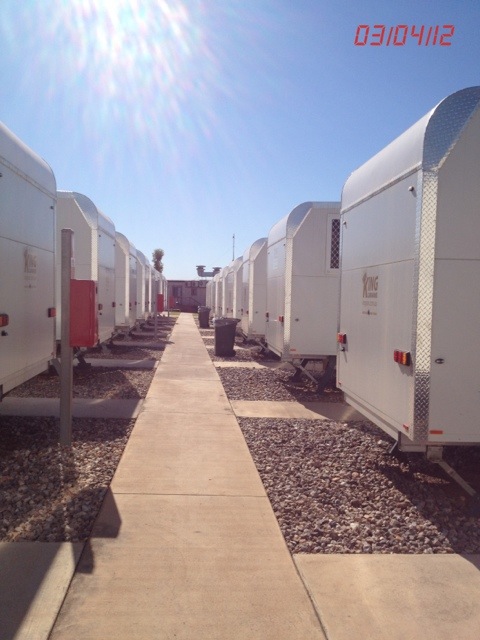
There is a great deal of talk in the media about Fly In Fly Out and I suppose Brisbane to Port Hedland which is the same distance as London to Jerusalem, is a fair way to go to work.We mobilsed a week ago so now it is life in the camp for three weeks then back to Brissie for one week! Round trip nearly 10,000 Kim’s or 6,200 miles in the old money so lots of frequent flyer points, long waits at airports, crap airline food and we won’t mention DVT. Is it worth it? Well most of the workforce gross $5,ooo per week and pay more tax in a year than two school teachers earn. They all get free accommodation, flights home and some of the best food I have ever had, plus free Foxtel, WIFI, laundry, transport to work, gym etc etc. And project managers get exactly the same conditions but some earn more than the Prime Minister of Australia. So yes it is worth it. Of course long hours and 13 days straight without a day off is tiring, but the full week at home plus the dollars make it worth while. But there is another side that is often overlooked. You work with people 10 to 12 hours each day seven days a week, you breakfast with them, have dinner with them, wash your clothes with them, and have to listen to them. So situations arise where someone you dined with the previous evening, is someone you have to pull in to line the next day. The secret is keeping a distance from those who are under your responsibility. And if you don’t the consequences become personal. Maybe that is why “the boys” call me an arrogant prick ……… But that’s better than a soft prick.

20120420-034144.jpg

20120420-034311.jpg

D and C

Design and construct is my preferred method of delivering projects, yet it can be the most frustrating. I like it because the project team can manage the process but I get frustrated when the team do not manage it well, and as a PM it is my responsibility to manage the team. Yes that sounds like a pile of crap because it is, the real reason is that it means the consultants are working for me NOT the client. I get to approve their invoices, comment on their drawings and generally get up them when they don’t perform.

An architect recently huffed and puffed that he “was not a subcontractor” and why? Because I insisted he signed a consultancy agreement. He being so apoplectic that his Dickie bow started spinning and carried him off to his 1992 Saab 900.

Now for hydraulic consultants aka a plumber with a tie. I have met very few of any real calibre, there are a few but not many. Structural engineers are absolute stars. They charge out a young kid straight from university at some exorbitant rate and when the check his calls just double the size of the steel member to allow for a “safety factor”.

But please don’t start me on acoustic engineers, green star rating advisers, interior designers, Colour coordinators, and the rest of the assorted bunch of “experts”.

But I am exaggerating a tad, I actually have a few friends in the consulting game and they give the construction survivor an equally hard time. There is a difference – I will never work for them. But will they keep working for me?

New Employees

First impressions when joining a new company are so important. Have you ever shown up on day one only to be greeted with “we did not know you were starting today”. To me the simple steps I put in place to greet new staff are what I expect myself.

I arrived at my new company yesterday morning. On by desk were my new mobile, new laptop, access codes, company procedures manual, contact lists, a welcome email and text, and my team expecting me. My hotel accommodation had been booked, and my car waiting for me at the airport.

Simple stuff but so many companies get it wrong. If they cannot be organised for a new starter how on earth can they organise and deliver projects.

It is so refreshing to get back to new construction where everyone in the team knows what they are responsible for, who they report to and who reports to them. Also to have tried and tested project management software in place ie job costing, document management systems etc. Turn the computer on and familiar icons for Primavera an Aconex appear, no Sharepoint and no linked spreadsheets – Nirvana!

A We have a month in Perth head office and then start on site in Port Hedland. All we need to do is rev up our consultants (D and C), meet the subcontract letting schedule, hire the final project team members and just get into it.

Don’t you just love the smell of green concrete in the morning! Mr Wolf is back.

FIFO

Yes I have joined the legions of Fly In Fly Out (FIFO) construction people here in Australia. I live in Brisbane and now work in Port Hedland. To my Pommy friends that like living in London and working in Jerusalem.

But I am returning to site based construction – concrete and cranes, and I cannot wait. I reckon construction is in the blood, those of us who have spent many years trying to meet deadlines, budgets, etc must have a passion for it, otherwise why would we do it?. It does not matter if it is a high rise on the Gold Coast, resorts on the Mediterranean or coal mines in Kalimantan, there is a certain buzz about being based on site and seeing a job come out of the ground. I need a break from the “coorporate” world of Powerpoint, Politics and Platitude. I want to hear he sound of concrete pumps in the morning not the sound of some bloody management consultant. I also want to feel I have earned my salary not because of what it says on my business card but for what I and the team have achieved.

So farewell Mackay and thanks for all the fish and hello Port Hedland, 39C today and the best fishing in Australia.

Project Controls

The first time I heard this term was a few years ago whilst working in the Middle East in Qatar. In Australia the role is usually described as Contract Administrator, but project controls much better describes the position.

The skills and experience that I have looked for in potential contract administrators can be broadly divided in to three:

  • contract management
  • financial management
  • schedule/programme management (on larger projects this becomes the role of project planner)

Unfortunately on some lesser size projects the contract administrator ends up being the dogsbody who has to manage the subcontractors, submit progress claims to the client, order the stationery and do the filing. So a lot of their time is spent carrying out tasks which they are grossly over paid for.

The concept of project controls ensures that the right people are doing the right job. Unfortunately if you have ever tried to hire an experienced planner who can use say Primavera you will know how difficult it is.

So far I have been talking about the construction industry, mining and infrastructure has even bigger problems. Many companies in this sector simply do not have the systems and expertise to run and deliver projects. There is a reluctance from the mining sector to bring in construction people, yet, here in Australia that is where the boom is taking place and that is where there is a desperate shortage of planners, contracts people and project managers.

Who Wants Sharepoint

SharePoint folks enjoying some Huey Lewis action

I cannot understand why many organisations have or are going down the road of Sharepoint implementation. My experience is in construction project management and have gone through Sharepoint implementation in two companies in the last five years. On both occasions it was sold to us as a document management system – it is a document repository, as simple as that. If you want it to be a management tool you have to get bolt ons or pay through the nose for consultants to adapt it. Instead you can simply buy Acconex, project Centre etc etc and straight out of the box you are managing your document flow, drawing storage, capturing project correspondence and all the other data you need to run projects.

When will IT people understand what we do instead of forcing us to change best practice to suit what they think we need ie collaborative software tools. Managing projects does have some collaboration between the various participants but that is outweighed by the need to have accurate real-time records and systems that are easy to learn, use and manage.I came across a great blog and I have reproduced part of it.

What’s wrong with Sharepoint?

“I tend to agree that Sharepoint sucks. Using it is like closing your eyes, holding your breath and spinning around for thirty seconds. When your done you don’t know where you are, you are very dizzy, and feel like you might throw up… I might create something in one place, but can’t delete it or rename it there. After 15 minutes of searching, I can’t find the same tool I used yesterday to do one thing or another. It’s like that house in 13 Ghosts, everything SEEMS to move around on you… What really bothers me is this is not version one. It is a great idea gone horribly implemented.

STAY AWAY… Sharepoint can be an incredibly useful tool, but in any office where I’ve seen it deployed, it’s acting merely as a web-based front-end to the file-system. If that’s all you’re going to be using it for, you might as well just use the file-system, via Explorer and mapped drives, and do away with the glorified front end.

I absolutely hate sharepoint even though it seems to be serving purpose here of a company with over 9,000 employees. i have to do the support and administrative stuff for it and have several users I can’t get connected to our Portal for some reason we can’t figure out.

Sharepoint…I hate Sharepoint with the passion of 10,000 burning Lotus Notes users…Sharepoint is a decent enough idea but it lacks a logical flow for navigation. Also, sometimes it just seems more cumbersome than it’s worth but eh, it works too.

Honestly, I found Sharepoint so inadequate and typical of a first generation MS product that I could only shake my head at it.  If it was made by anyone else than MS and had to compete on its merits I suspect most of us would have never even heard of it”

So any business that has an IT department as a support service is exposed to having software imposed on it by people who often do not even understand what that business does.

If you find yourself in that position, you can push back and if that fails simply move on

Profit – percentage or dollars

If you were discussing a pay rise with the boss would you ask for a percentage increase or a dollar amount. When you organize your household budget do you ever use percentages?

Of course you don’t, dollars mean cash income, percentages are for government spin doctors and bean counters. If you apply for a car loan or a mortgage the prime question is about how much do you earn ie cash.

So how to change this way of financial reporting? and get away from margins to the real world of cash – dead easy – stop trying to make us all accountants.

Readers have seen my views previously regarding killing off spreadsheets which is aka accountancy current practices. But that is a completely separate discussion. However, it was the bean counter who first started using Lotus 123 and now the expectation of employers is that is how the project manager will report on the project’s financial performance.

When a tender is accepted we know what the client is going to pay and if the estimate is accurate we know our costs. At the financial wrap up we know what we have been paid and what it has cost. The skill in forecasting between these two points in time is aided by using good project management systems such as Jobpac or Cheops.

The margin percentage is just a result of a simple calculation. The cash profit is what shareholders want.

Voyages

Image_facsimil
Image via Wikipedia

“There is a tide in the affairs of men.
Which, taken at the flood, leads on to fortune;
Omitted, all the voyage of their life
Is bound in shallows and in miseries.
On such a full sea are we now afloat,
And we must take the current when it serves,
Or lose our ventures”

Oh dear I hear the reader groan, he has started quoting Shakespeare. But something made me remember this quote from Julius Ceaser when we learnt it at school forty years ago. I suppose the “Matrix Jolt” was caused by a certain event which happened thirty years ago today. The birth of my first child an event so life changing, so bright and uplifting that I was never the same again. Ok I can hear you saying “my god what was he like before this event?” Well as good old Leonard C would say he was a sailor looking for a port.

Well enough of the family reminiscences and Shakespeare’s quotes let’s get back to construction or as it is at the moment, coal mining in Queensland. The quotation is curiously apposite as well. Big investments are being made, skills shortages recognised, more boom times ahead. Or are they. The GFA mark two hangs over us like Damocles’ sword and if it falls the repercussions will be dire, investment will stop, over extended mortgagees will lose their houses, the social effect will be devastating. We need to be prudent and show some foresight.

We all know what comes after a boom